
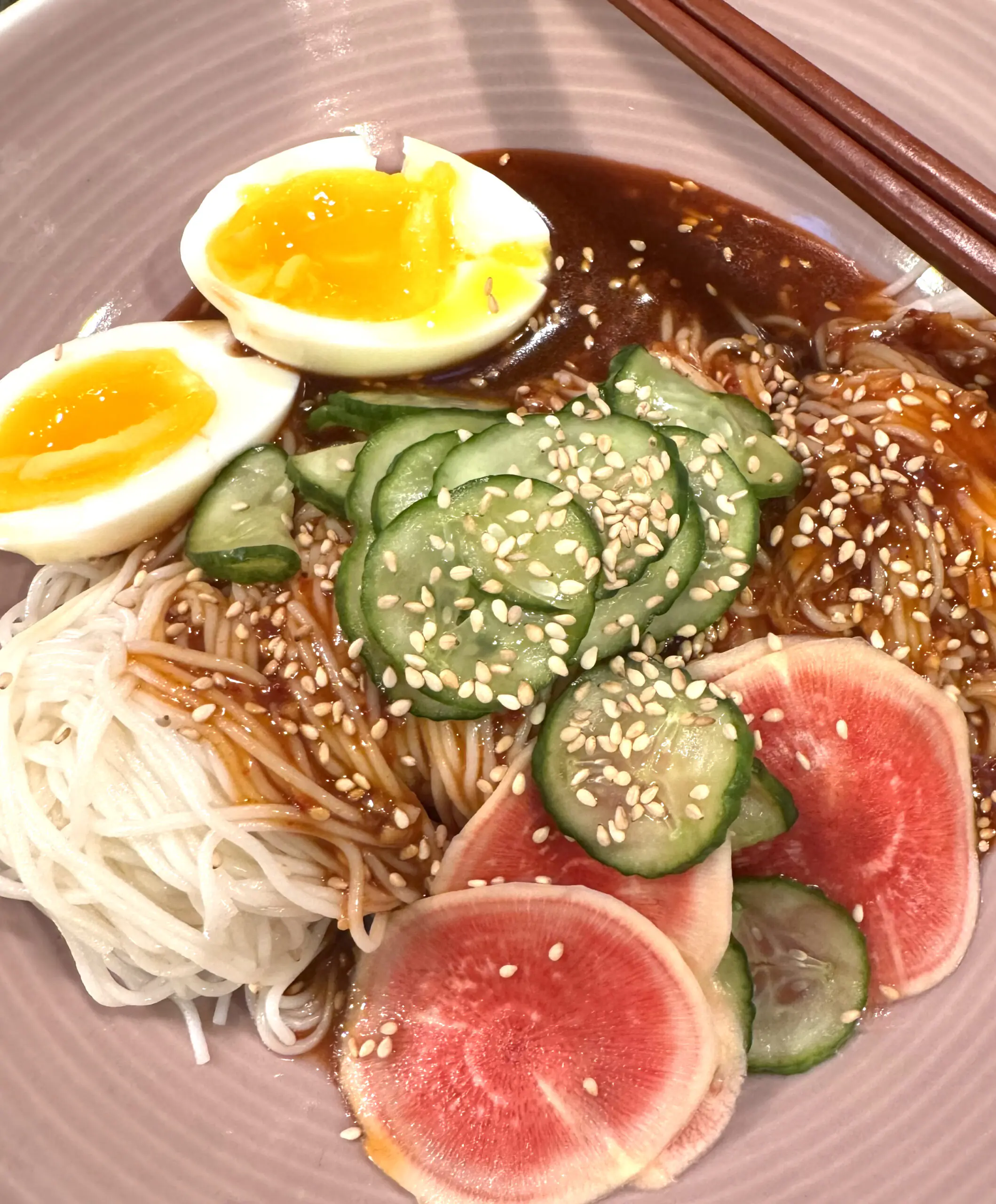
Summer is finally here. In 24 hours, the temperature went from a pleasant 70 degrees to 89 degrees, and has been in the 90s for the last week. My brain automatically switched gears, and a variety of cold dishes came to mind, especially noodle ones. I have a soft spot for cold noodle salads. My OG Cold Somen Salad is always a crowd favorite, as is a vegetarian Spicy Noodle Salad. Soon, cherry tomatoes will pop-up at the Farmers’ Market, and Eric Kim’s Cold Noodles with Tomatoes will be in our rotation of refreshing summer meals.
Looking for something a little different, I thought of the Korean dish Bibim-guksu or Spicy Mixed Cold Noodles. It’s 90 degrees outside, so now is the perfect time to make it.
Let’s Break It Down
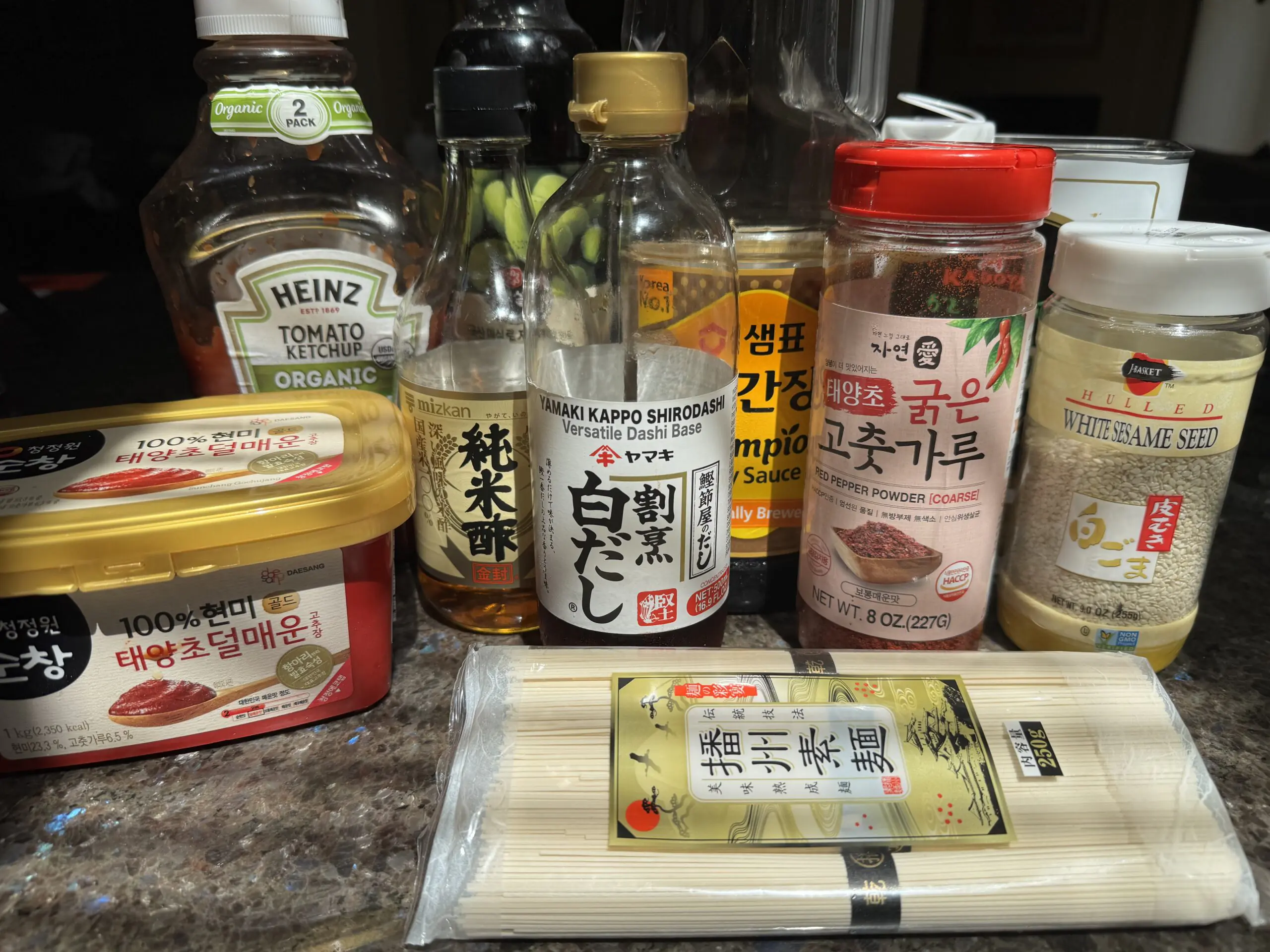
Gochujang: Korean chili paste that is both sweet and spicy. A cornerstone in Korean cooking. You can find it in most Asian markets and even Trader Joe’s (I can vouch for theirs, though, I haven’t tried it). It comes in different heat levels, mild, medium, and hot, so make sure you pick accordingly.
Gochugaru: Chili powder or flakes, provides spice-heat. Using this is optional. Found in most Asian grocery stores.
Rice Vinegar: I usually opt for Japanese rice wine vinegar. Rice wine vinegar is milder and a bit sweeter than other vinegars and pairs well with Asian recipes. You can use apple cider vinegar, which is a bit fruitier and sharper in taste, but works well in Bibim-guksu. Both widely available in grocery stores and Trader Joe’s.
Soy Sauce: Use any all-purpose soy sauce, such as Kikkoman or LKK Premium Soy Sauce. I, personally, because I’m a stickler, use Sempio 501, a Korean soy sauce…because this is a Korean recipe. 🤷🏻♀️
Dashi: A soup base concentrate made of bonito flakes, which adds a bit of brininess, salt and smokiness. Optional.
Ketchup: Or is it Catsup? Enquiring minds want to know.
Sesame Oil: Toasted, dark, the Asian kind. Widely available, but the best price will be at Asian Markets because we use it like water.
Sesame Seeds: Widely available. Available toasted or raw at Asian grocery stores.
Somen Noodles: Thin, silky Japanese wheat noodles found in most Asian stores. Can’t find them, use angel hair pasta, works GREAT.
Toppings: Add what you like, sliced or julienned vegetables such as cabbage or lettuce. Quick-pickled slices of cucumbers or watermelon radishes, or cherry tomatoes, are colorful and delicious. A hard-boiled egg is a must. Garnish with additional sesame seeds and crushed toasted seaweed.

Helpful Hints:
It is important to prep everything for this dish before boiling the noodles. Make the sauce ahead of time so the flavors meld and mellow. Once all of the ingredients are ready, boil the noodles (do not overcook), rinse well in cold water, and drain. Place noodles in a bowl, add the sauce, and mix well. Top with vegetables and garnish, enjoy. The noodles are very thin and will absorb too much moisture, losing their bouncy texture if they sit for too long.
Adding ketchup to Bibim-guksu is a new twist. It adds a bit of sweet tanginess to the dish. Start with less sugar or honey in the sauce, and taste until it reaches the desired sweetness. I thought it was a bit too sweet. Use Dashi Soy or add a half tablespoon of Kappo Dashi (soup base) for added umami.
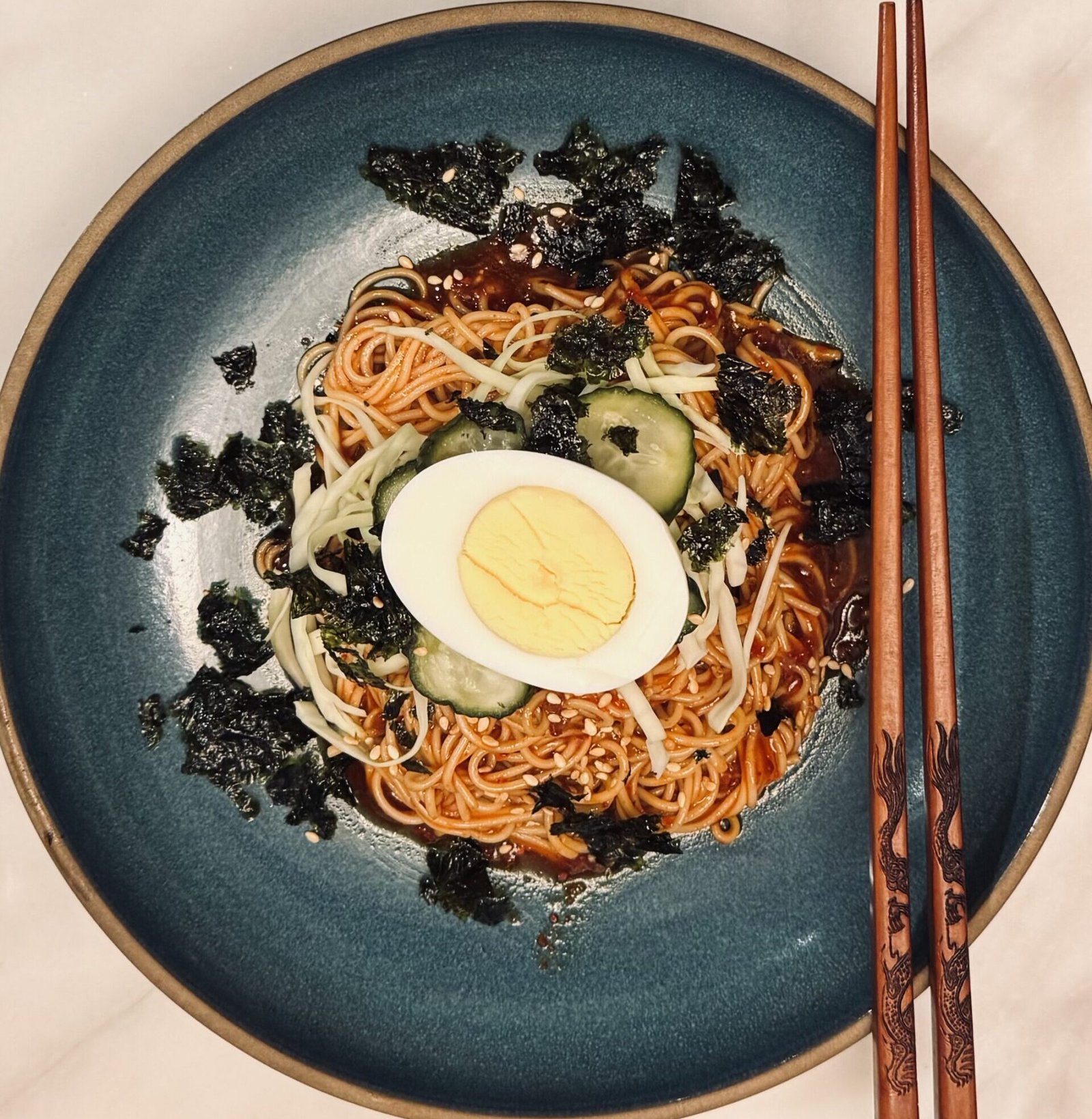
Bibimguksu
Ingredients
Noodles
- 2-3 bundles somen (4-5 ounces) thin wheat noodles or angel hair pasta
The Sauce:
- 1 Tbsp gochujang Korean chili paste
- 1 Tbsp ketchup
- 1 Tbsp soy sauce if not using dashi increase to 2 tbsp
- 1 Tbsp rice vinegar or apple cider vinegar
- 1 tsp minced garlic
- 1 Tbsp Maesil Cheong (Plum Extract) substitute sugar or honey
- 1 Tbsp toasted sesame oil
- 1 Tbsp gochugaru Korean chili flakes, adjust for heat. Too spicy, use 1/2 tbsp.
- 1/2-1 Tbsp Kappo Shiro Dashi soup base concentrate, optional
- 1-2 Tbsp pickling liquid or water
Quick Pickled Cucumbers and/or Radishes
- 3 Persian cucumbers, thinly sliced* little less than 1/8" thick. Add watermelon radishes if desired.
- 1/4 cup rice vinegar or apple cider vinegar
- 2 Tbsp sugar*
- 1 tsp salt
Toppings:
- 1/2 cup julienned cucumber or pickled cucumbers if not using pickling cucumbers, julienne cucumbers and add raw
- 1 med-boiled or hard-boiled egg split in half
- 1 Tbsp roasted sesame seeds
- 1/4 cup shredded poached chicken optional
- 1/2 cup shredded lettuce or cabbage optional, recommended
- seasoned seaweed, nori sheets or furikake garnish
Instructions
Sauce: Make ahead of time to allow flavors to blend
- In a bowl, whisk together the gochujang, ketchup, soy sauce, vinegar, garlic, sesame seeds, sugar, dashi, and sesame oil until smooth. If it is too thick, add 1 T water. Adjust to taste.
Somen
- Cook the Noodles: Boil the somyeon according to package directions (about 2-3 minutes). You can use Angel Hair Pasta instead.
- Drain the noodles and rinse them vigorously under ice-cold water while rubbing them gently to remove excess starch. Squeeze excess water from noodles.
- Place noodles in a bowl. Pour the sauce over the noodles and mix well.
- Top with desired toppings. Cucumbers, a boiled egg, and a generous sprinkle of sesame seeds.
Quick Cucumber Pickling
- Combine vinegar, sugar and salt in bowl.
- Thinly slice cucumbers and radish and place in pickling solution for 30 minutes.
- Drain and squeeze excess liquid from cucumbers. Reserve pickling solution.
Notes
IG Reel!