

Last week felt like winter’s last stand. The temperature dropped, it rained (yay, we can always use the precipitation even when summer is just around the corner), and Jamie and I were hit with the cold/flu bug. So, despite being the month of May. I found myself wishing for something hearty and comforting. I stumbled upon an amazing website while looking for a recipe for Galbi Jim, a Korean beef rib stew I knew would chase away my rainy day and cold blues. Just the name of the site alone won me over, Spoonforkbacon. The site is loaded with tips, ideas, and recipes, and the photography is wonderful. Their food looks scrumptious. I’ll be wandering over often for inspiration.
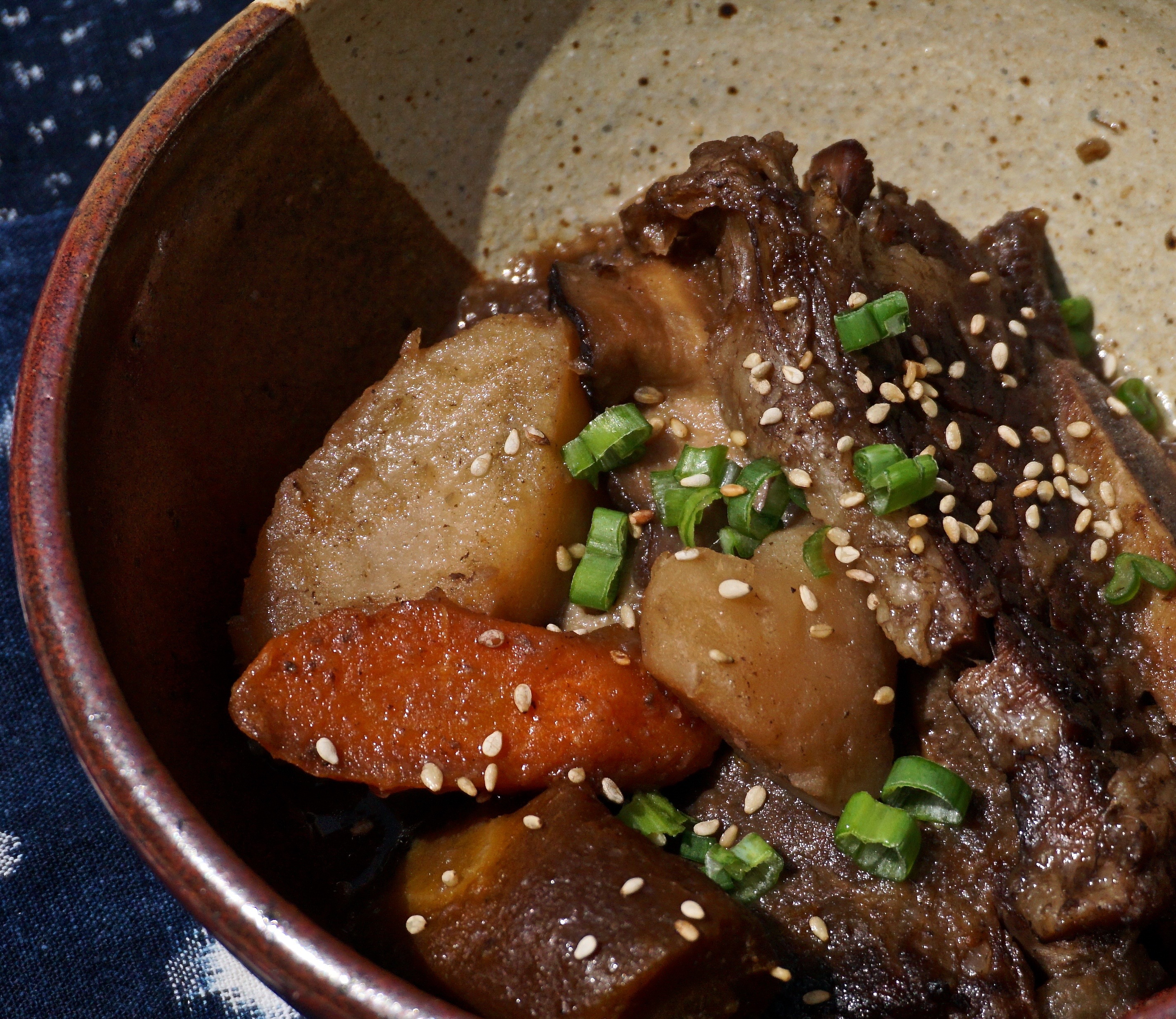
This is the Korean version of beef stew. Seasoned with soy, garlic, sesame, sugar, and mirin, it has that sweet-salty flavor profile I love. The Asian pear adds sweetness and serves as a tenderizer. If you can’t find an asian pear, a fine stand-in would be a kiwi. Multi-color organic carrots, found at TJ’s, and fresh shiitake mushrooms work beautifully in the dish. Feel free to play with amounts. Want it less sweet? Cut the sugar back to 1/4 cup.
Where’s the Beef?
Use cross-cut short ribs, also known as flanken style or Hawaiian style ribs. The pieces are much thinner, approximately 1/2 to 5/8 inch thick, which shortens the cooking time considerably. With this cut, reduce the cooking time accordingly. Bring the ribs to a boil for only 5 to 10 minutes, depending on thickness. Drain ribs, add seasonings and water, and cook for approximately 30 minutes until ribs are just tender. Add vegetables and simmer additional 20 minutes. Additional water can be added if needed. You can add a medium onion, quartered to this recipe (at the same time as seasonings and water are added to the beef) if you like. I also think this stew would work well using pork or chicken. This is really a homey, easy dish. Try it before the weather gets too warm! Here is the recipe from SpoonForkBacon. Check out the site, after all, everything’s better with BACON!
The following recipe is my version of Galbijjim (갈비찜) made in an Instant Pot, a win-win!.
FALL Into One Pot Meals (Korean Beef Stew)
Ingredients
Adapted from Korean Bapsang
- 3 to 4 pounds oxtail
- 1 medium onion cut into large chunks
- 2-3 carrots cut into large chunks
- 1 white potato cut into large chunks Yukon Golds for a less starchy, russets for starchy
- 3 to 4 dried shiitake mushrooms briefly soaked and quartered (use fresh mushrooms if not available)
Braising liquid
- 1/2 cup soy sauce
- 1/2 cup rice wine or mirin a sweet Japanese cooking wine
- 1/2 medium Asian pear or 1 bosc pear or apple, grated
- 2 tablespoons minced garlic
- 1 inch ginger grated (about 1 teaspoon)
- 3 tablespoons honey or sugar
- 3 tablespoons maesil cheong or 1 more tablespoon honey or sugar
- pepper to taste
Garnishes
- 1 tablespoon sesame oil
- 2 scallions roughly chopped (and some finely sliced for optional garnish)
- sesame seeds-toasted
Instructions
- Trim off excess fat. Rinse the oxtail pieces and let them sit in cold water for 10 to 20 minutes to draw out excess blood. Drain well, and pat dry with paper towels.
- Press the “Saute” button on the Instant Pot. When the pot is hot, add 1 tablespoon of canola or vegetable oil. Sear the oxtail pieces in two batches, browning all sides. Or sear in separate pan and place in Instant Pot
- Combine ingredients for braising liquid and pour the braising liquid over oxtails. Add the vegetables.
- Close the lid tightly. Press the “Meat” function, and using the “+” button, increase the time to 45-48 minutes. 48 minutes for softer meat. When finished, the Instant Pot will automatically turn to the “Keep Warm” mode. Leave the pressure cooker alone for about 10 minutes before opening the lid.
- Stir in the scallion and the sesame oil. Remove the meat and vegetables from the pressure cooker. Strain the cooking liquid into a bowl to skim off the fat. Pour sauce over the ribs.
- Garnish with the optional scallions and sesame seeds. Serve with hot rice.